

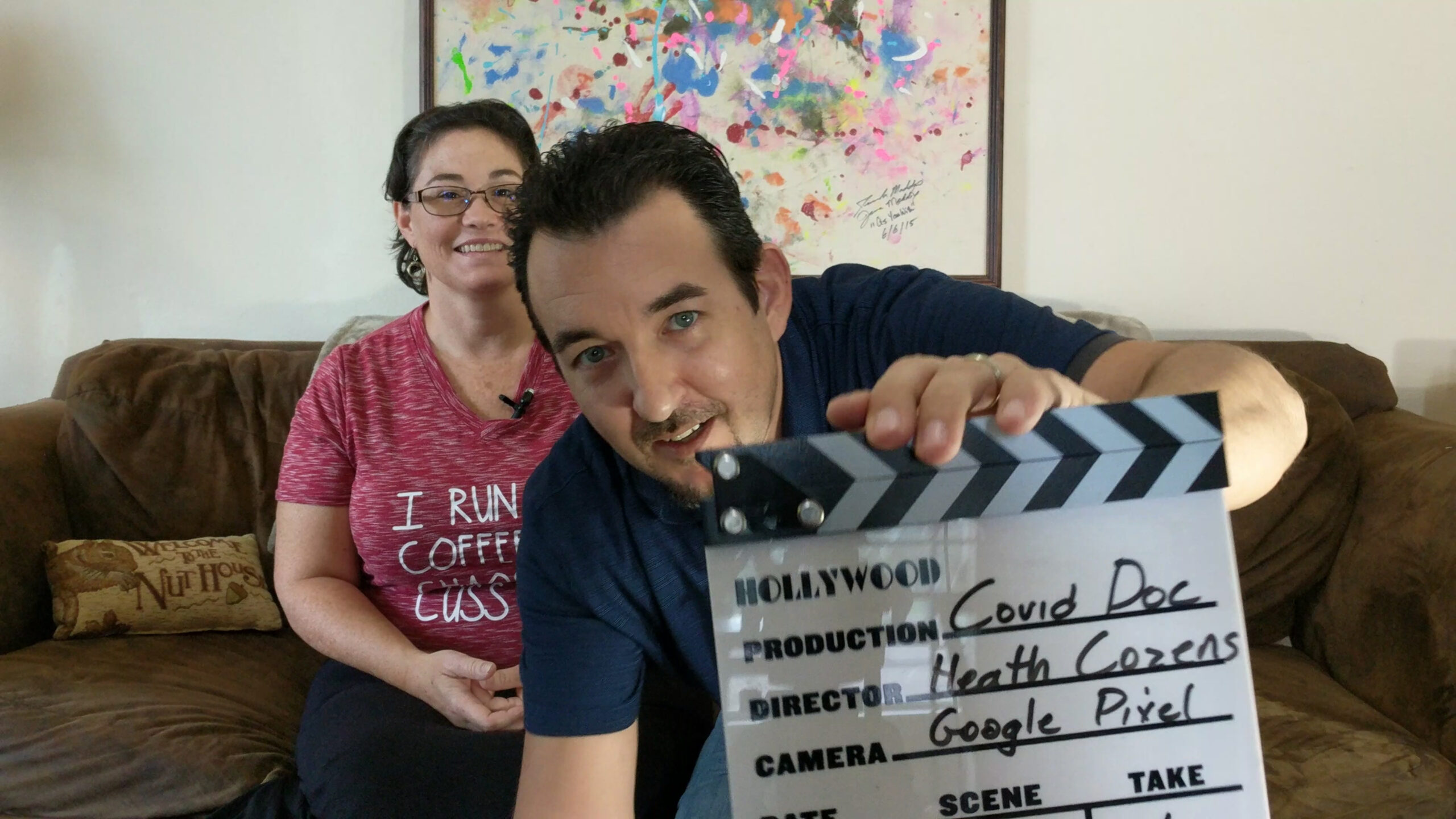
17 May Fluent Chats With Family Strong Director Heath Cozens
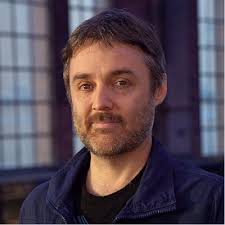 Last year, we undertook an ambitious task to create a documentary series in the middle of a global pandemic. The result was “Family Strong,” a series of 12 intimate episodes sharing the stories of five diverse families as they navigated those unprecedented times. Thanks to the expertise of our director/producer/editor extraordinaire, Heath Cozens, the series was a resounding success collecting multiple awards and receiving thousands of views. In this interview, we chat with Heath about what it was like to produce the series under such challenging circumstances and find out how the families featured are doing since filming wrapped.
1) How did the idea for “Family Strong” come about?
Back in the early days of COVID, when NY was the epicenter of infection, it felt like history was unfolding at double-speed.
The funny thing was that everybody was having these extraordinary experiences, everything was so consistently off-kilter that the weirdness had become passe. I felt that everyone was wearing a mask of stoicism and that we almost couldn’t talk about what was going on in our lives for fear of being too self-centered, even though we were all falling apart in private.
Every day was stranger and more dramatic than the last, and I wanted to capture the moment before these silent stories were lost.
Fluent was conducting a major study on family wellbeing during the pandemic, and the web series concept was a natural match.
2) The series was filmed during the pandemic, how did you adapt the production process to accommodate this unprecedented situation?
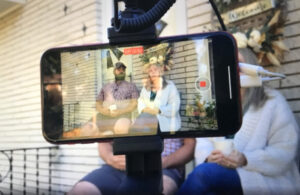
Without the luxury of traveling, it would have to be shot by the participants themselves.
Access and trust are key to the quality of a documentary, and what better access could you have than to see the world through your subjects’ eyes, or through those of a beloved family member?
Because we were filming longitudinally, telling an ongoing story about their lives in real-time, we worked tightly together to ensure that we were telling a story that they were happy with. I would interview them, then assess what storylines to focus on.
But doing it this way required me to put my cards flush on the table from the get-go. We were going deep, with folks who had only met me over the internet, at a very difficult point in their lives. So I was constantly gauging comfort levels, and checking my story hunches with them. Based on my story ideas, I’d flesh out a shot list, and have them shoot it.
I’d also ask them to shoot “spontaneous stuff” that may or may not have anything to do with the story. Naturally, this would almost always be the best!
And it goes without saying that the participants were rigorously trained in rudimentary documentary filming techniques.
3) What is your personal favorite episode and why?
It changes, but “Episode 07: The ‘Love’ Thingy,” speaks to me. I’m a sucker for stories about people trying to connect over some divide. There’s also so much serendipity and humor in the conversations that Larry has with his partner Sam’s kids, Amelia and Carter, it sets it all off beautifully.
Larry told me later that Carter would watch it by himself, and that it had become a touchstone for their relationship. Larry felt that the episode had helped cement their relationship. I was so happy to hear that.
4) It’s been a few months since the series wrapped, can you give us an update on some of the families?
Our hardworking mom, Ivy, has been working a lot (no surprise). She’s vaccinated and has been letting her son Tyson do playdates, cautiously. She’s still dealing with mysterious ailments which may or may not be to do with her autoimmune disease. The specter of Asian hate crimes is stressful.
Parents of our newly-blended family, Samatha and Larry, are doing just fine. Life has returned to normal, the kids are playing sports, and so is Larry of course. Samantha is doing (and acing) online college and has started an online jewelry business.
Dad Joe has thrown himself back into work — 60-80 hours a week as well as his music gigs. His wife Brandi’s online market continues to do well. Their daughter Nikki is still giving them a run for their money, but Joe says, “we are blessed now with the means and opportunity to get her some help.”
Our other dad, Jeremiah, is exploring acting, and his wife Jenna has taken a new job training to become an RBT (Registered Behavior Technician) working with autistic kids and their behavioral problems. “The kids are about the same,” she says, “total, lovable pains!”
College student Isabella is thrilled to have a field producer credit on a multiple-award-winning documentary series! She’s working on her own documentary about the experience she shared with us in episodes 11 and 12. She’s moving back to LA, living with friends, and planning to go back to USC in person in the fall.
5) What do you as a filmmaker learn from creating this series?
I guess I learned to love the phone as a tool! It allows you to get really special access. When I see real reactions and looks to the camera — the kind of look that a child might only give their parent, or the other way around — it comes from a place of deep trust. When people are that comfortable in front of a camera, it reminds me of what good documentaries look like.
There’s a classic book called “Directing the Documentary” by Michael Rabiger that I studied in college, and he talks about this. To paraphrase, a documentary can only be as good as the trust that allows it to be made.
As a filmmaker returning to the field soon, this project motivates me to be worthy of that level of trust.
You can watch our “Family Strong” series in full on our website and our YouTube channel.