
25 Apr The Power of Perspective in Documentary Storytelling
Years before I joined Fluent, a single emoji—texted in good faith—nearly derailed a documentary I was co-directing. One of the crew, who was texting with a teen participant about an upcoming shoot, sent her a smiley, and instantly blew up the production.
In his mind, he’d just been maintaining the friendly tone. But if you watched Adolescence* on Netflix, you know: emojis don’t always mean what you think. From our participant’s perspective, that emoji came loaded with cultural context.
The Power of Perspective
Family and friends circulated a screenshot, aggravating a teen rivalry, and when the dust settled, production shut down. Six months of silence and second-guessing followed, as we tried to get back in alignment with our “hero” participant. All because of an emoji that meant different things to different people.
As a filmmaker, I think a lot about perspective. In storytelling–visual or otherwise–choices about what we choose to observe or omit are highly intentional, and shape the story. Content + content = narrative. And we try to get that story in alignment with the participant’s perspective, too. But perspective shapes our realities in subtle ways beyond storytelling, as well.\
Perspective and Research
Take research, for example. Imagine a traditional focus group tableau: participants seated around a big table, recorded by a wall-mounted camera. Watching from that angle—looking down, through a screen—it’s hard to relate. And when an empathic disconnect occurs, meaning can become skewed or abstracted.
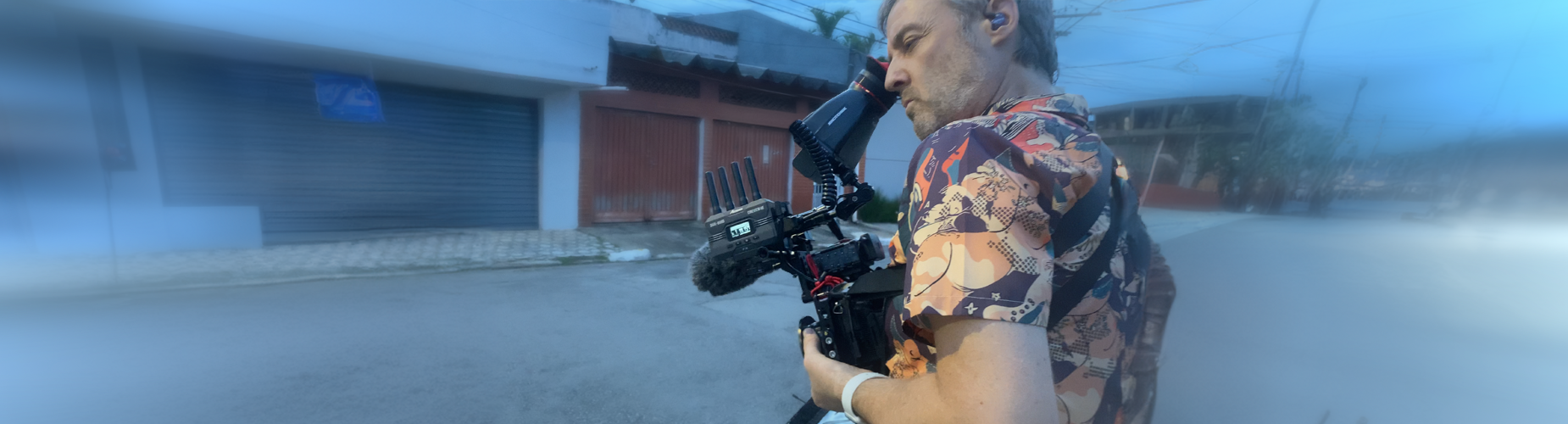
The camera is a stand-in for the human eye. That’s why, in documentary filmmaking, we’re super-careful about camera placement. At Fluent, for example, we almost always film from eye level, or even below it, looking slightly upward. It’s not a stylistic flourish. It’s a philosophical stance. We refuse to look down on participants. We meet them where they are. Sometimes, we bend the knee (ouch!), look them in the eye, and try our very best to see the world as they do.
Perspective and Storytelling
And yet sometimes, it’s that sincere, indefatigable, undeniably quixotic effort to be at one (and/or atone) that can save a documentary from purgatory. And so it was with our film. Granted the opportunity to speak at last, we dropped the assumptions. We rebuilt trust through transparency. Every morning, we met with our teenage star and her family—not as subjects, but as collaborators. We shared our vision and asked her: “Is this your truth? If not, guide us toward it. How should we be looking at this? What deserves our focus?”
She didn’t just return to the set—she led. She suggested things to film. She opened up. When she felt seen, she showed up. The film went on to win accolades. But the bigger shift happened behind the lens. We, the filmmakers, let go of the illusion that controlling the story makes it stronger. And that shift now informs every film I make.
Photojournalist Robert Capa once said: “If your pictures aren’t good enough, you’re not close enough.” I’d add: proximity matters—but so does perspective. When we meet people at eye level, we create the conditions for real understanding, and gain insights that not only inform us, but move us.
Written by Heath Cozens, Director, Fluent Productions
*Adolescence is a masterclass in movement and emotional storytelling. Each episode is, incredibly, a “oner”—a single, fluid shot that immerses the viewer in shifting perspectives, and the consequences of not seeing beyond our own.